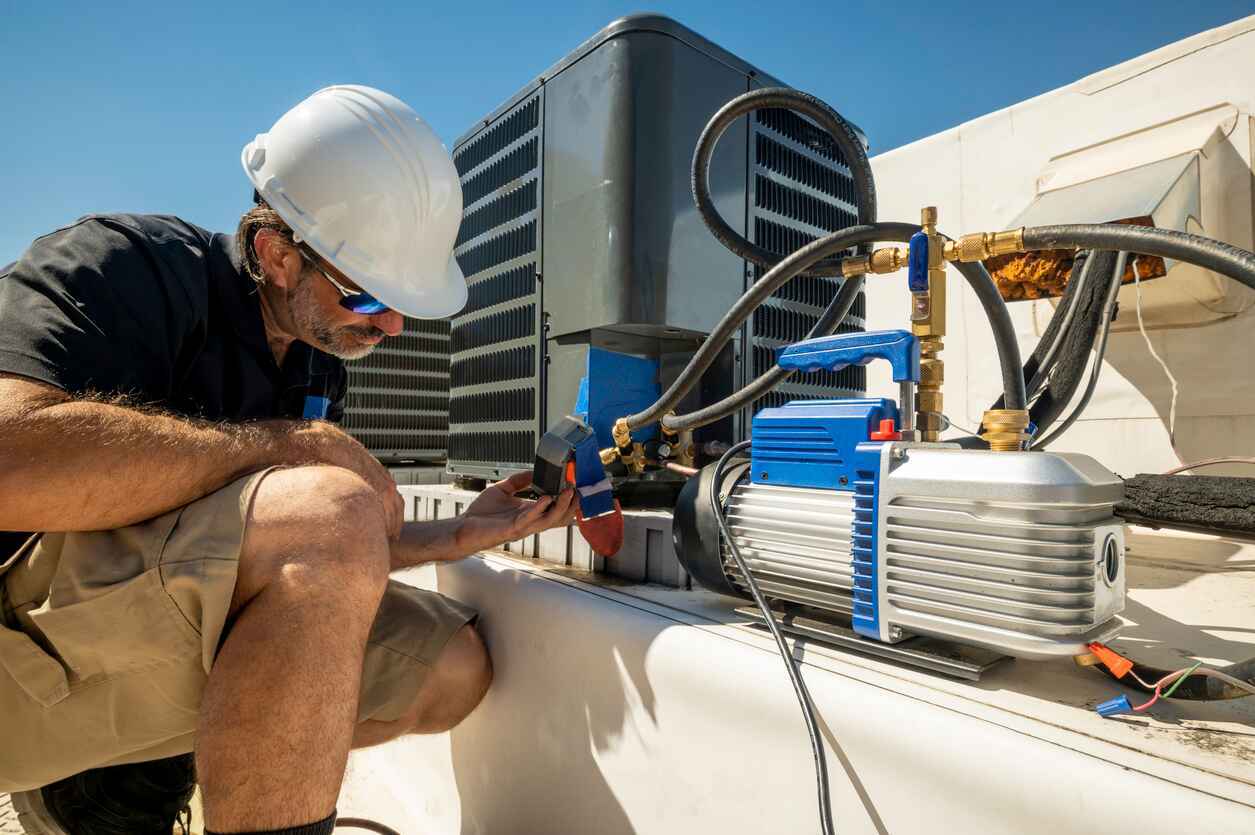
It’s 2:00 PM on a Tuesday in July. The outdoor temperature is climbing toward 95 degrees, and the humidity is thick enough to chew. Inside your facility—whether it’s a high-traffic retail space, a data center, or a manufacturing plant—the air has gone still. Then, the call comes in: the rooftop unit is blowing hot air, or worse, it’s completely dead.
As a business owner or facility manager, this is the moment you dread. It’s not just about discomfort; it’s about the bottom line. Inventory can spoil, servers can overheat, and employees lose productivity. Now you face the ultimate "fork in the road" decision: Do you authorize a several-thousand-dollar emergency repair to get back online today, or do you bite the bullet and invest in a full system upgrade?
At Diversified Refrigeration, we’ve seen this scenario play out across commercial and industrial sectors for decades. Making the right choice requires balancing immediate cash flow against long-term operational viability. This guide will walk you through the financial, operational, and technical factors that should drive your decision.
The "Band-Aid" vs. The "Rebirth": Understanding the Stakes
In the industrial world, HVAC isn't a luxury; it’s infrastructure. When a system fails, the pressure to choose the cheapest "fix" is immense. However, the cheapest fix today is often the most expensive mistake by next year. The decision usually boils down to the "Rule of Three": Age, Cost, and Frequency.
When Emergency Repair Makes Sense
Repairing an existing system is often the right move if:
- The system is under 10 years old: Most commercial units have a lifespan of 15–20 years if maintained well. If your unit is in its "prime," a repair is a sound investment.
- The repair cost is less than 50% of the replacement value: This is a general rule of thumb. If a $20,000 unit needs a $3,000 compressor, the math favors the repair.
- The failure is an isolated incident: If the system has been a "tank" and this is its first major hiccup, it likely has plenty of life left.
- Availability of Parts: If the parts are standard and readily available, a repair can get you back in business within hours, minimizing downtime.
When a Full System Upgrade is Non-Negotiable
You should pivot to replacement if:
The "Frequent Flyer" Syndrome: You know your HVAC technician’s first name because they are at your facility every month. If you are spending $2,000 every quarter on "minor" fixes, you’re already paying for a new system—you just don’t have it yet.
Phased-out Refrigerants: If your system still runs on R-22 (Freon), repairs are becoming astronomically expensive due to environmental phase-outs.
Energy Bills are Skyrocketing: Older units lose efficiency. A new, high-efficiency SEER2-rated system can often pay for itself in energy savings within 3–5 years.
- System Mismatch: If your facility has expanded or changed its layout, your old unit may no longer be sized correctly, leading to constant strain and premature failure.
Real-World Stakes: Lessons from the Field
To understand the gravity of this decision, we only have to look at recent industrial events. During the record-breaking "Heat Dome" of 2023 that scorched much of the southern and western United States, several large-scale cold storage facilities faced a reckoning.
Case Study 1: The Distribution Center Crisis
One notable case involved a regional food distribution center that opted for a series of emergency repairs on an aging chiller system rather than upgrading during the off-season. When the heat wave hit, the patched-together system suffered a catastrophic failure. Because it was a "forced" emergency during peak demand, lead times for parts were weeks out. The result? Hundreds of thousands of dollars in spoiled product and a frantic, premium-priced emergency replacement that cost 30% more than a planned install would have.
Case Study 2: The Precision Manufacturing Success
Contrast this with a precision machining plant in the Midwest. They noticed their 18-year-old units were struggling to maintain the tight humidity tolerances required for their high-end CNC equipment. Rather than waiting for a total breakdown, they partnered with Diversified Refrigeration to phase in a full system upgrade using Variable Frequency Drive (VFD) technology. When the 2023 humidity spikes arrived, their facility remained perfectly controlled, while competitors had to shut down lines due to equipment expansion and condensation issues. They didn't just buy a machine; they bought competitive advantage.
The Technology Gap: Why Modern Systems Win
It is easy to think that an HVAC unit is just a box that blows cold air. However, the technology gap between a system built in 2005 and one built in 2024 is massive.
- Variable Frequency Drives (VFDs): Older systems are either "on" or "off," much like a light switch. This creates massive power surges and wear on the motor. Modern systems use VFDs to ramp up and down slowly, using only the energy needed to maintain the set temperature.
- Smart Monitoring and IoT: Modern industrial units can be integrated into your building management system (BMS). This allows for predictive maintenance—the system can literally text your facility manager to say, "My vibration levels are high; check my bearings," before the part actually breaks.
- SEER2 Standards: New federal regulations have raised the floor for efficiency. Even the most basic "entry-level" new unit is likely significantly more efficient than your current aging system.
The Financial Breakdown: Repair vs. Replace
| Feature | Emergency Repair | Full System Upgrade |
|---|---|---|
| Upfront Cost | Moderate ($1,500 - $8,000+) | High ($15,000 - $100,000+) |
| Time to Completion | 24–48 Hours (usually) | 1–2 Weeks (planning required) |
| Energy Efficiency | Remains stagnant or declines | Immediate 20–40% improvement |
| Warranty | Usually 30–90 days on parts | 5–10 years manufacturer warranty |
| Tax Benefits | Maintenance deduction only | Section 179 deductions & Energy Credits |
| Operational Risk | High (potential for next failure) | Low (new system reliability) |
| Technology Access | Stuck with legacy controls | Integrated IoT & Smart Monitoring |
The Hidden Costs of "Just One More Year"
Many facility managers view a new HVAC system as a "capital expenditure" they want to kick down the road. But there are "ghost costs" associated with keeping an old unit on life support:
- Productivity Loss: Research shows that for every degree above 75, office productivity drops by about 2%. In a manufacturing environment, excessive heat leads to fatigue, higher error rates, and increased safety incidents.
- Safety Hazards: Industrial HVAC isn't just about temp; it's about ventilation. Poor air exchange can lead to air quality violations or health risks for staff, especially in facilities dealing with chemicals or heavy dust.
- The "Emergency Premium": When you call for a repair on a Sunday at 2:00 AM, you are paying for the convenience. Doing a planned upgrade allows you to shop for the best rates and schedule the downtime during low-impact hours (like a holiday weekend).
- Damage to Other Equipment: An HVAC system that isn't pulling moisture out of the air can cause rust on expensive machinery or short-circuits in sensitive server rooms.
Frequently Asked Questions
What Is the "50% Rule" in Commercial HVAC?
The 50% rule suggests that if the cost of a single repair exceeds 50% of the value of a brand-new system, replacement is the more economical choice. For commercial owners, we often adjust this to 30-40% when you factor in the tax incentives and energy savings associated with new technology.
How Does the R-22 Phase-Out Affect My Decision?
As of 2020, R-22 refrigerant is no longer produced or imported in the U.S. If your system leaks and requires R-22, the cost to "recharge" it is now astronomical because the supply is so limited. In almost every case, we recommend upgrading to a modern, eco-friendly refrigerant system rather than pouring money into a "dying" R-22 unit.
How Long Does a Installation Typically Take?
While a repair takes hours, a full replacement usually takes a few days of site prep and one to two days for the actual swap. However, at Diversified Refrigeration, we specialize in "seamless transitions," often using cranes and specialized crews to ensure your business stays operational during the process. We aim for zero-impact on your production schedule.
Does a New System Improve Indoor Air Quality (IAQ)?
Absolutely. Modern industrial systems come with superior filtration (HEPA/MERV 13+) and better humidity control. This doesn't just feel better; it reduces the spread of airborne illnesses and protects sensitive equipment from dust and moisture damage, which can extend the life of your other capital assets.
Choosing a Southeast Pennsylvania Partner for the Long Haul
At the end of the day, your HVAC system is the heartbeat of your facility. You shouldn’t have to make these high-stakes decisions alone or under the duress of a sweating building. You need a partner who understands that "commercial" isn't just a label—it's a different level of demand. You need someone who looks at your building as a whole ecosystem, not just a series of vents and compressors.
Whether you are currently staring at a broken unit or you’re trying to plan your 2025 CAPEX budget to avoid a summer catastrophe, Diversified Refrigeration is here to provide the expertise you need. We pride ourselves on being the experts you can call when things get tough, and the advisors you trust when it's time to grow.
Don't wait for the next heatwave or a total system collapse to make the decision for you. Visit Diversified Refrigeration today to schedule a comprehensive system assessment and ensure your facility is ready for whatever the seasons throw at it.